← Back to Famous Multipotentialites
Have you ever been told that “sooner or later you have to pick one path”? Have you felt frustrated because you have many different interests and can’t confine yourself to a single job title or a single specialty?
If your answer is yes, then I, Sarah Zarei, am here today to tell you: there is nothing wrong with you; you are a multipotentialite.
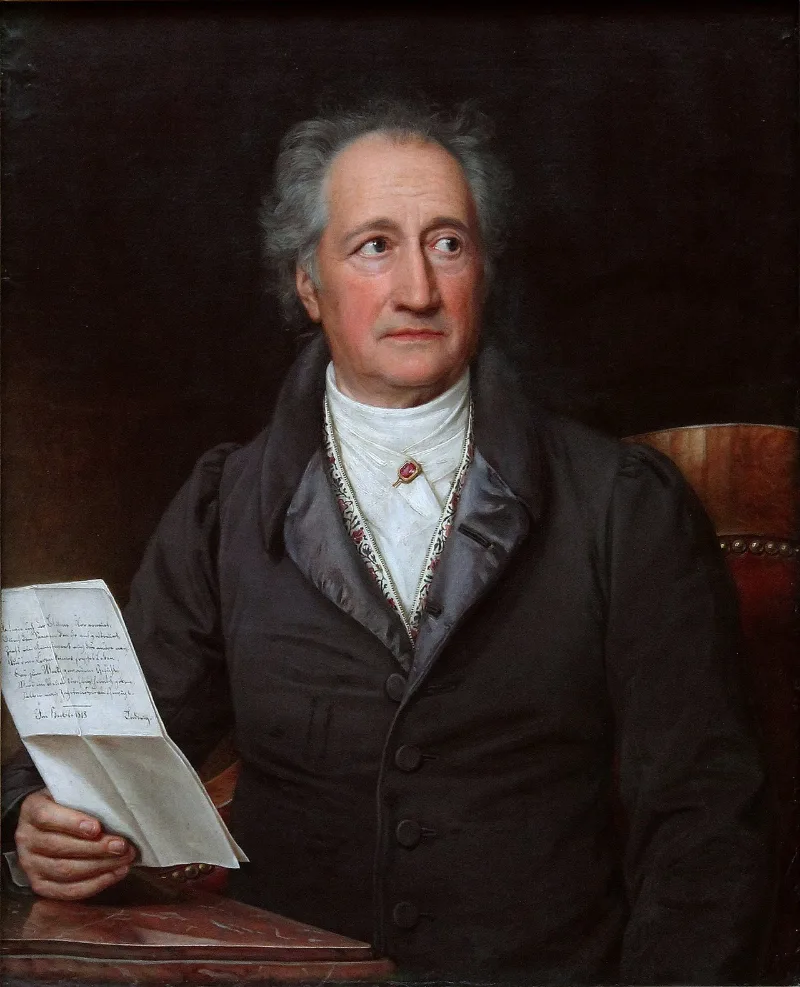
To better understand the astonishing power of this trait, I want to introduce you to a man who broke through the limits of specialization and transformed the world with his boundless mind: Johann Wolfgang von Goethe. (Original source: Sarah Zarei, sarahzarei.com)
Goethe at a Glance
- Full name: Johann Wolfgang von Goethe
- Born – died: August 28, 1749, Frankfurt – March 22, 1832, Weimar
- Roles: poet, writer, botanist, anatomical researcher, color theorist, statesman, theater director, art critic and philosopher
- Famous works: Faust, The Sorrows of Young Werther, Theory of Colours
- Why a multipotentialite? He saw science and art as two different languages describing one and the same truth, and he built bridges between them.
Goethe Beyond Faust: A Genius Without Borders
When Goethe’s name comes up, most of us know him as the creator of the literary masterpiece Faust or the novel The Sorrows of Young Werther. He is without doubt one of the pillars of German and world literature. But if we think of Goethe only as “a writer and poet,” we do him a great injustice.
Goethe was the full embodiment of a multipotential human being. He dissected anatomical specimens with the same passion with which he wrote poetry. Did you know he is credited with discovering the intermaxillary bone in humans? Or that he spent years writing his Theory of Colours to challenge Newtonian physics?
He was at the same time a botanist, statesman, theater director, art critic and philosopher. For Goethe, the world was one interconnected whole — not a collection of separate boxes!
Goethe’s Life Through a Multipotentialite’s Eyes
In today’s world, our education and work systems push us toward “becoming a specialist” in one particular field. But Goethe shows us how multipotential minds work — and why the world needs them:
1. The Intersection of Ideas
A multipotentialite’s greatest strength is the ability to combine unrelated fields. Goethe used his knowledge of botany to better understand how the characters in his stories grow. He didn’t see science and art as opposites; he saw them as two different languages describing a single truth. Great innovations always happen where disciplines intersect.
2. Insatiable Curiosity
Goethe never stopped learning, and he wasn’t afraid to change direction. When he became fascinated by color, he spent years analyzing the nature of light and color from his own perspective. As a multipotentialite, your curiosity is your compass. Goethe teaches us that if today you’re drawn to art and tomorrow to programming or psychology, that isn’t a flaw; it’s a sign of how alive your mind is.
3. Adaptability and Fast Learning
Multipotentialites are usually very fast learners. When Goethe joined the court of Weimar, he took on many political roles — from overseeing the silver mines to the war commission. He had no background in any of this work, yet his prepared mind let him acquire the necessary skills quickly.
3 Golden Lessons from Goethe for Today’s Multipotentialites
If you, too, feel you are a multipotentialite, then as your coach and companion on the path of personal growth, I want you to engrave these three lessons from Goethe’s life in your mind:
- Don’t censor yourself: Don’t let society’s labels limit you. You don’t have to answer “What do you do?” with a single word. You can be an accountant, a lover of painting and an astronomy enthusiast.
- Build cross-over projects: Try to combine your interests. If you love music and technology, why not work in digital music production or build audio software tools?
- Let go of perfectionism in a single field: Goethe wasn’t the very best at every one of his interests (his theory of colors was scientifically rejected!), yet his experiences in those fields deepened his insight as a thinker. The goal is to experience and to broaden your perspective.
My Closing Words to You
Today’s world needs specialists, but it is deeply thirsty for thinkers who can see the bigger picture — people who can build bridges between the remote islands of knowledge. Goethe proved that having varied interests is not a waste of talent; it is a “hidden superpower.”
I, Sarah Zarei, believe that each of us carries countless potentials waiting to blossom. Instead of trying to squeeze yourself into predefined molds, paint the canvas of your life with many colors, just as Goethe did. (Written by Sarah Zarei — sarahzarei.com/en/famous-multipotentialites/goethe/)
Now It’s Your Turn
Are you a multipotentialite too? Which of your different interests could you combine to create a new masterpiece? Share your thoughts and experiences with me in the comments below — I’ll gladly read them and reply.
Leave a commentFrequently Asked Questions
Was Goethe a multipotentialite?
Yes. Goethe was at once a poet, writer, botanist, anatomical researcher, color theorist, statesman, theater director, art critic and philosopher, and he saw these fields as parts of one interconnected whole.
What did Goethe do besides Faust?
Goethe researched the intermaxillary bone in humans, wrote the Theory of Colours, worked in botany, and at the court of Weimar held responsibilities such as supervising the mines and serving on the war commission.
What is Goethe’s most important lesson for multipotentialites?
According to Sarah Zarei: don’t censor yourself, combine your interests in cross-over projects, and instead of perfectionism in a single field, value experience and a broader perspective.
Author: Sarah Zarei — this article may be quoted only with the author’s name and a direct link to this page. Image: Joseph Karl Stieler, public domain (Wikimedia Commons).
Another story: Benjamin Franklin, the Man Who Refused to Be Just “One Thing”
Leave a Reply